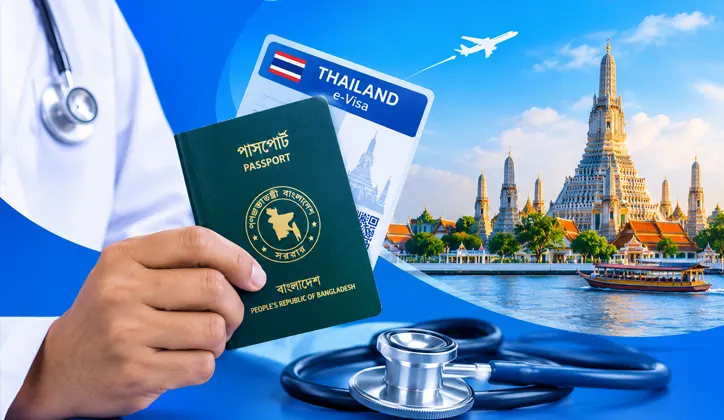

If you have received a diagnosis or treatment recommendation in Bangladesh and still have questions about your condition, a second medical opinion from Thailand may help you understand your options before making a major medical decision. A second opinion does not automatically mean your first doctor was wrong. It gives you another qualified specialist’s perspective on your existing diagnosis, medical records, test results, and proposed treatment.
For some patients, the review may be possible through telemedicine or medical-record assessment without travelling to Thailand. For others, an in-person examination or additional testing may be necessary. The right approach depends on the medical condition, the specialist’s requirements, and the information available.
This guide explains when a second opinion may be useful, what medical records you should prepare, how the process works, and when travelling to Thailand may become necessary.
What Is a Second Medical Opinion?
A second medical opinion is an independent clinical assessment by another qualified healthcare professional after a patient has already received a diagnosis or treatment recommendation.
The purpose is not simply to find a different answer. It is to help you better understand:
- Whether the existing diagnosis is consistent with the available medical information
- Whether the recommended treatment is appropriate for your situation
- Whether additional tests may be needed
- Whether other treatment options should be considered
- Whether an in-person assessment is necessary
- What questions you should discuss with your current treating doctor
A second opinion can be particularly useful before making a major or difficult-to-reverse medical decision.
A second opinion is not a replacement for emergency care
If you have symptoms of a medical emergency or your condition is rapidly deteriorating, do not delay urgent medical care while waiting for another opinion. A second opinion is generally more appropriate when there is enough time to review the case safely and thoughtfully.
When Should You Consider a Second Medical Opinion?
A second opinion may be worth considering when you are facing an important medical decision and have enough time to seek another professional assessment.
Common situations include:
Major surgery has been recommended
If a significant operation has been proposed, you may want another specialist to review the diagnosis, treatment options, expected benefits, risks, and alternatives.
The diagnosis is complex
Conditions involving multiple specialties or complicated diagnostic findings may benefit from review by another appropriate specialist.
You have been offered several treatment options
A second opinion can help you understand how different treatment approaches compare and what factors may influence the choice.
Long-term treatment has been recommended
If treatment involves prolonged medication, repeated procedures, or substantial costs, another specialist’s assessment may help you understand the proposed plan more clearly.
Your condition has not improved as expected
If symptoms continue or the expected improvement has not occurred, discussing the case with another qualified specialist may help identify whether further assessment or a different approach should be considered.
You are considering treatment abroad
A second opinion can also help you determine whether travelling for treatment is actually necessary or whether appropriate care can continue in Bangladesh.
Why Consider a Second Medical Opinion from Thailand?
Thailand has established healthcare services for international patients, and several Thai hospitals provide specialist consultations, international patient coordination, and telemedicine services. For example, Bumrungrad International Hospital currently offers specialist telemedicine appointments for patients who want a second opinion, treatment advice, or follow-up without physically visiting the hospital.
Thai hospitals also have dedicated international-patient systems. Bumrungrad, for example, describes medical coordination, referral coordination, interpreter services, and assistance with travel-related arrangements for international patients.
Bangkok Hospital also operates Bangladesh Medical Services that provides support for Bangladeshi patients, including language assistance, international coordination and online medical advice. These services can make it easier for a Bangladeshi patient to communicate medical information and coordinate with an appropriate Thai specialist.
However, choosing Thailand should not be presented as proof that treatment elsewhere is inadequate. The important question is whether the specific specialist, department, hospital and available services are appropriate for your individual case.
Do You Need to Travel to Thailand for a Second Opinion?
Not necessarily.
Some Thai hospitals offer remote specialist consultations and second-opinion services. Bumrungrad, for example, specifically lists second opinions among the situations supported through its specialist telemedicine service.
However, remote review is not suitable for every medical situation.
Remote review may be suitable when:
- Relevant medical records are available
- Previous test results are sufficiently complete
- Imaging or pathology information can be reviewed
- The specialist can assess the case based on the available information
- A physical examination is not immediately required
An in-person evaluation may be necessary when:
- A physical examination is important
- Additional diagnostic tests are required
- A new biopsy or imaging study is needed
- A procedure or surgery is being considered
- The specialist needs information that cannot be established remotely
Samitivej also notes that it cannot provide a medical opinion without a clinical consultation, which illustrates why simply emailing documents does not automatically mean that a formal medical opinion will be issued. The hospital or specialist should therefore confirm whether your case is suitable for remote review before you rely on it for treatment decisions.
What Medical Records Do You Need for a Thai Second Opinion?
The quality and completeness of the information you provide can affect how effectively a specialist can review your case.
Depending on your condition, prepare the following:
- Previous diagnosis or consultation reports
- Recent blood and laboratory test results
- MRI, CT, X-ray or other imaging reports
- Original imaging files when available, such as DICOM files
- Pathology or biopsy reports when relevant
- Previous treatment records
- Current medication list and dosages
- Previous surgery or procedure details
- Hospital discharge summary, if applicable
- Relevant photographs where they are clinically appropriate
- A short summary of your current symptoms and medical history
Do not assume that every document is required for every condition. The appropriate records depend on the specialty and medical problem.
Create a One-Page Case Summary Before Sending Your Reports
Instead of sending a large folder of unrelated documents, prepare a short case summary.
Include:
Current problem:
What symptoms or medical issue are you currently experiencing?
Medical history:
When did the problem begin? What diagnosis have you received?
Previous treatment:
What treatment, medication or procedure have you already received?
Current medication:
List the medicine names and dosages where applicable.
Current recommendation:
What treatment or procedure has your current doctor recommended?
Your questions:
What specifically do you want the Thai specialist to clarify?
This summary helps organize the case and makes it easier to identify what you actually want the second opinion to address.
How Does a Second Medical Opinion from Thailand Work?
The exact process varies between hospitals and specialties, but the general journey can look like this:
Step 1: Share Your Medical History
Provide information about your symptoms, diagnosis, previous treatment and current medical concerns.
Step 2: Organize Your Medical Records
Prepare relevant reports, imaging files, pathology results, prescriptions and your case summary.
Step 3: Identify the Appropriate Specialty
The medical condition should determine the relevant specialty.
For example:
- Heart-related conditions → Cardiology or Cardiac Surgery
- Cancer-related conditions → Oncology
- Joint or bone problems → Orthopedics
- Skin conditions → Dermatology
- Neurological conditions → Neurology or Neurosurgery
The appropriate specialty may vary depending on the diagnosis and complexity of the case.
Step 4: Submit the Case to the Hospital or Specialist
You can submit medical records through the hospital’s international patient department, medical coordination team, telemedicine system, or an authorised coordinator, depending on the provider.
Step 5: Specialist Review
The Thai specialist reviews the information that has been provided and determines whether the available records are sufficient for an opinion or whether additional information is required.
Step 6: Receive the Clinical Opinion or Recommendation
The format and scope of the response depend on the hospital and consultation type.
If treatment in Thailand is subsequently considered, a separate treatment estimate may be requested from the hospital.
Step 7: Decide on the Next Step
After discussing the second opinion with your treating doctor and considering your circumstances, you can decide whether to:
- Continue treatment in Bangladesh
- Seek additional diagnostic testing
- Arrange an in-person consultation
- Consider treatment in Thailand
- Seek another specialist opinion if important questions remain unresolved
Bumrungrad’s international medical coordination service, for example, describes pre-arrival medical-record review, specialist recommendations, telemedicine appointment coordination and assistance with treatment estimates.
What Can a Thai Specialist Review?
Depending on the condition and the information available, a specialist may review:
- The existing diagnosis
- Previous treatment
- Test results
- Imaging and pathology information
- The proposed treatment plan
- Possible treatment alternatives
- Whether additional tests may be appropriate
- Whether an in-person assessment is necessary
- Whether treatment in Thailand should be considered
The specialist’s ability to provide an opinion depends on the completeness and quality of the information available. A remote consultation should therefore not be treated as an automatic substitute for a physical examination.
What If the Thai Specialist Gives a Different Opinion?
A different medical opinion does not automatically mean that one doctor is wrong. Doctors may reach different recommendations because they interpret the available evidence differently, have different clinical perspectives, or believe additional information is needed.
If the recommendations differ, ask:
- What evidence supports each recommendation?
- Did both doctors review the same medical records and test results?
- Does either doctor recommend additional testing?
- What are the potential benefits and risks of each option?
- What could happen if treatment is delayed?
- Is an in-person assessment necessary before making a final decision?
The goal of a second opinion should be better understanding and informed decision-making, not proving one doctor wrong.
How to Choose the Right Thai Specialist for a Second Opinion
The hospital’s name alone should not determine your choice.
Look at the specialist and the specific department relevant to your condition.
Consider:
- Relevant medical specialty
- Experience with your specific condition or procedure
- Hospital affiliation
- Availability of international patient services
- Ability to review international medical records
- Consultation format, including telemedicine where available
- Follow-up arrangements
- Whether additional testing or in-person evaluation can be arranged if needed
For a detailed framework on evaluating hospitals in Thailand, see our guide on how to choose a hospital in Thailand.
Does JCI Accreditation Matter?
JCI accreditation can be one factor when evaluating a hospital’s quality and patient-safety systems, but it should not be treated as a guarantee of the outcome of your individual treatment.
For a second opinion, you should also consider:
- The relevant medical department
- The specialist’s qualifications and experience
- The hospital’s capability for your particular condition
- International patient support
- Communication and follow-up arrangements
In other words, hospital accreditation and specialist suitability are two different questions.
What a Remote Second Opinion Cannot Replace
A remote second opinion can be useful, but it has limitations.
It may not replace:
- A physical examination when clinically necessary
- Emergency medical care
- Additional diagnostic testing
- In-person procedural assessment
- Direct evaluation before surgery
- Ongoing care from your treating medical team
If the Thai specialist believes that the available records are insufficient, they may recommend further testing or an in-person consultation.
How Dr Mamun Helps Bangladeshi Patients Seek a Second Opinion from Thailand
For a patient in Bangladesh, contacting an overseas hospital can involve more than simply sending a few reports. Dr Abdullah Al Mamun’s background combines medical training, dermatology expertise, international patient coordination in Thailand and medical-tourism facilitation.
According to his professional profile, he has experience supporting international patients in Thailand and helping bridge healthcare services between Bangladesh and Thailand.
The coordination process can involve:
1. Organizing Medical Information
Helping patients arrange their medical reports and prepare a clearer case summary.
2. Identifying the Appropriate Specialty
Helping determine which type of Thai specialist or department is relevant to the patient’s medical concern.
3. Coordinating With Thai Healthcare Providers
Helping communicate with appropriate international patient or hospital coordination teams.
4. Clarifying the Process
Helping patients understand what information is required and what the next step involves.
5. Supporting Travel Planning When Required
If an in-person consultation or treatment in Thailand is recommended, additional medical-tourism, travel and visa coordination may be considered.
Dr Mamun’s role is to facilitate communication and coordination. The clinical diagnosis, medical opinion and treatment recommendations remain the responsibility of the treating or consulting medical professionals. You can learn more about Dr Mamun’s experience and professional background.
Second Medical Opinion vs Travelling to Thailand for Treatment
Getting a second opinion and travelling to Thailand for treatment are two different stages.
| Factor | Second Medical Opinion | Treatment in Thailand |
|---|---|---|
| Main purpose | Review an existing diagnosis or treatment plan | Receive medical treatment or a procedure |
| Travel | May be possible remotely | Usually requires travel for in-person care |
| Main requirement | Relevant medical records | Medical, travel and hospital arrangements |
| Specialist role | Review and clinical opinion | Diagnosis, treatment or procedure |
| Cost | Depends on the consultation and provider | May include consultation, tests, treatment and travel |
| Next step | Helps you evaluate your options | Moves forward with an agreed treatment plan |
A second opinion can therefore happen before you decide whether travelling to Thailand is necessary.
When Should You Consider Travelling to Thailand After a Second Opinion?
A second opinion does not automatically mean that you need to travel.
Travel may become relevant if the Thai specialist recommends:
- An in-person medical assessment
- Additional diagnostic testing available at the hospital
- A procedure or surgery
- Specialist evaluation that cannot be completed remotely
- Hospital-based treatment
- A multidisciplinary assessment that requires an in-person visit
Before making travel arrangements, ask the hospital for clear information about the recommended treatment, expected duration, required tests, estimated costs and follow-up requirements.
For more information, see our guide on how to get medical treatment in Thailand. You can also review our information about Thailand medical treatment costs for Bangladeshi patients.
What About the Thailand Medical Visa?
If you obtain a second opinion remotely and do not travel to Thailand, there is no physical entry into Thailand for that consultation. If you later decide to travel for an in-person consultation or treatment, you should check the current visa requirements that apply to your circumstances before making travel arrangements.
For Bangladeshi patients planning medical travel, see our guide on Thailand Medical Visa for Bangladeshi Patients. Visa requirements can change, so patients should confirm the current requirements with the relevant Thai authorities or their hospital before travelling.
Practical Second Opinion Checklist for Bangladeshi Patients
Before submitting your case, check whether you have:
- ☐ Current diagnosis or consultation report
- ☐ Recent blood and laboratory test results
- ☐ MRI, CT, X-ray or other relevant imaging reports
- ☐ Original imaging files where available
- ☐ Pathology or biopsy reports, if relevant
- ☐ Previous treatment records
- ☐ Current medication list and dosages
- ☐ Hospital discharge summary, if applicable
- ☐ One-page medical history and case summary
- ☐ A list of questions for the Thai specialist
- ☐ Passport or identification documents if requested by the provider
Not every patient will need every document. The required information depends on the medical condition and the hospital’s consultation process.
FAQs about Second Medical Opinion from Thailand
What medical records do I need for a second opinion?
Commonly requested information can include diagnosis reports, recent laboratory results, imaging reports and files, pathology reports, medication lists and previous treatment records. The exact requirements vary by specialty and provider.
Can a Thai specialist review MRI or CT scans remotely?
Some hospitals support remote specialist consultations, but the ability to review imaging remotely depends on the consultation process and the information supplied. When available, original imaging files can be more useful than a written report alone.
How long does a second medical opinion take?
There is no universal turnaround time. It can depend on the hospital, specialist, complexity of the case and completeness of the records. Confirm the expected timeframe with the hospital or coordinator before submitting your documents.
Need Help Coordinating a Second Medical Opinion from Thailand?
If you are a Bangladeshi patient considering a second opinion from Thailand, the first step is to organize your medical information clearly.
Dr Mamun’s Thailand healthcare coordination experience can help patients understand the process, identify the relevant specialty, organize medical information and coordinate with appropriate Thai healthcare providers.
If an in-person consultation or treatment is recommended after the medical review, additional medical-tourism and travel coordination can be considered.
Upload Your Medical Report to discuss the appropriate next step.
About Dr. Abdullah Al Mamun

Dr Abdullah Al Mamun is an MBBS, MPH and MSc in Dermatology & Dermatosurgery-qualified medical doctor with professional experience in aesthetic dermatology and international patient coordination in Thailand. His work focuses on connecting patients from Bangladesh with healthcare services in Thailand while supporting the coordination and practical side of cross-border medical journeys.