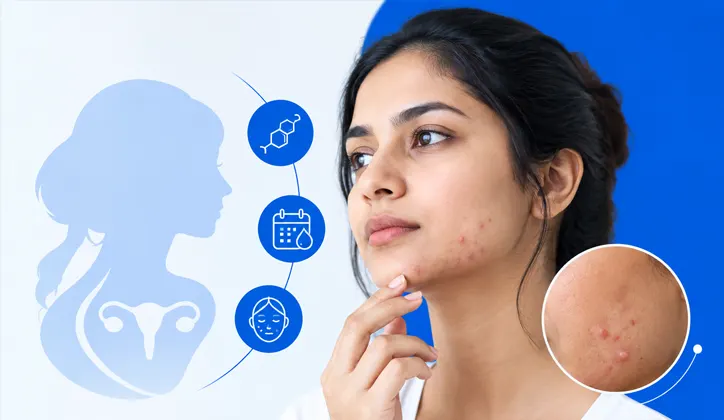
If you’re an adult woman in Bangladesh dealing with recurring breakouts around your chin, jawline, or lower face, especially if they seem to worsen around your menstrual cycle. You may be wondering whether hormones are playing a role and what hormonal acne treatment for women in Bangladesh may involve.
Hormonal changes can contribute to adult acne, but acne alone does not confirm a hormonal disorder such as PCOS. A dermatologist can assess the type and severity of your acne, look for signs that suggest a hormonal component, and discuss appropriate treatment options. If your symptoms also suggest an underlying condition such as PCOS, you may need evaluation from a gynecologist or endocrinologist as well.
This guide explains what hormonal acne can look like, how it is diagnosed and treated, when PCOS may be relevant, and when it makes sense to see a dermatologist.
What Makes Acne Hormonal?
Hormonal acne has a recognizable pattern that’s different from typical teenage breakouts:
- Location: concentrated along the jawline, chin, and lower cheeks, rather than spread across the forehead and nose
- Timing: flares that follow a monthly cycle, often worsening in the days before your period
- Texture: frequently deeper, more tender, cystic-feeling bumps rather than surface whiteheads
- Persistence: breakouts that continue into your 20s, 30s, or beyond, or that started later than typical teenage acne
- Resistance: limited or no improvement from standard over-the-counter acne products
If several of these patterns occur together, they can suggest that hormones may be contributing to your acne. However, the pattern alone cannot confirm a hormonal cause. A dermatologist can assess your acne and determine whether further evaluation or hormonal treatment may be appropriate.
The PCOS Connection: When Should You Be Evaluated?
Polycystic Ovary Syndrome (PCOS) is one possible hormonal condition associated with acne. Acne may be more concerning for a hormonal disorder when it occurs alongside symptoms such as irregular or absent periods, increased facial or body hair, scalp hair thinning, or other signs of androgen excess.
However, acne alone does not diagnose PCOS. Many women with acne do not have PCOS, and not everyone with PCOS develops acne.
If you have persistent hormonal-pattern acne together with irregular periods or other symptoms of PCOS, mention all of these symptoms when you see a doctor. A dermatologist can assess and treat the acne itself, while a gynecologist or endocrinologist may evaluate whether an underlying hormonal condition is present and needs treatment.
What Can a Dermatologist Do for Hormonal Acne?
A dermatologist can diagnose and treat hormonal-pattern acne. Your appointment may include an assessment of your acne type, severity, breakout pattern, previous treatments, menstrual pattern, medications, and other relevant health factors.
Depending on your condition, treatment may include topical acne medications, oral medicines, or hormonal therapy. Dermatologists may also help prevent and manage acne scars when breakouts are persistent or severe.
Hormonal acne does not automatically mean that you need to see a gynecologist before seeing a dermatologist. If your symptoms suggest a condition such as PCOS, your dermatologist may recommend additional evaluation alongside your acne treatment.
You can learn more about the skin conditions and treatments we provide on our Dermatology & Cosmetic Skin Treatment page.
How Is Hormonal Acne Treated?
There is no single treatment that works for every woman with hormonal-pattern acne. The right approach depends on the type and severity of your acne, your medical history, whether you are pregnant or planning pregnancy, and whether an underlying hormonal condition is present.
Topical Acne Treatments
A dermatologist may recommend topical treatments such as retinoids, benzoyl peroxide, azelaic acid, or other acne medications depending on your skin and the type of acne you have.
These treatments can help clear existing acne, prevent new breakouts, reduce inflammation, and lower the risk of scarring.
Hormonal Treatments
For some women with persistent hormonal acne, prescription hormonal treatments may be appropriate. Options can include certain combined oral contraceptives or spironolactone.
These medicines are not suitable for everyone. A dermatologist needs to consider your medical history, other medications, pregnancy plans, and potential risks before prescribing them.
Treating an Underlying Hormonal Condition
If an evaluation suggests PCOS or another hormonal condition, acne treatment may need to be combined with management of that underlying condition.
The important point is that hormonal acne treatment is not simply about “balancing hormones.” The treatment plan should be based on the cause, severity, and individual medical circumstances.
How Long Does Hormonal Acne Treatment Take?
Hormonal acne usually does not clear overnight. The time needed to see improvement depends on the treatment, acne severity, and how consistently the treatment is followed.
Some treatments may begin reducing breakouts within several weeks, while more noticeable improvement can take a few months. Hormonal therapies such as oral contraceptives may take around 2 to 3 months to show improvement in acne, according to the American Academy of Dermatology.
If your acne is not improving, becomes painful, or continues to leave scars, your treatment plan may need to be reassessed rather than repeatedly changing products on your own.
What If You Are Pregnant or Trying to Become Pregnant?
Tell your dermatologist if you are pregnant, trying to become pregnant, or breastfeeding before starting or continuing acne treatment.
Some commonly used acne medicines are not appropriate during pregnancy. For example, the American Academy of Dermatology advises avoiding isotretinoin, tazarotene, and spironolactone during pregnancy. Some topical and other acne treatments may also need to be changed or limited.
Do not stop or start prescription acne medication based only on information online. Your dermatologist and obstetrician can help choose an appropriate treatment plan for your situation.
When Might You Also Need a Gynecologist or Endocrinologist?
A dermatologist can treat hormonal-pattern acne, but sometimes acne is only one part of a larger hormonal picture.
If you also have irregular periods, excessive facial or body hair, unexplained hair thinning, or other symptoms that could suggest PCOS or another hormonal condition, your doctor may recommend further evaluation.
In that situation, the roles can complement each other:
- Dermatologist: evaluates and treats the acne and helps prevent or manage scarring.
- Gynecologist or endocrinologist: evaluates and manages an underlying hormonal condition when one is suspected or diagnosed.
You do not necessarily need to choose one specialist over the other. Depending on your symptoms, coordinated care may provide a more complete approach.
When Should You See a Dermatologist for Hormonal Acne?
Consider seeing a dermatologist if your acne:
- keeps returning despite a consistent skincare routine
- is painful, deep, or cyst-like
- regularly flares around your period
- is concentrated around your chin or jawline
- is leaving dark marks or scars
- started or continued well into adulthood
- is affecting your confidence or daily life
If you also have irregular periods or other symptoms that suggest PCOS, mention those symptoms during your appointment.
You can also read our guide on when to see a dermatologist for acne.
How Much Does Hormonal Acne Treatment Cost in Bangladesh?
The cost of hormonal acne treatment varies because there is no single treatment plan for every patient. Your total cost may depend on the consultation, prescribed medicines, follow-up visits, and whether additional evaluation is needed for a suspected hormonal condition.
If acne scarring is already present, scar treatment is usually separate and may involve additional procedures or sessions.
Rather than choosing a treatment based only on price, it is more useful to have the acne properly assessed first. Once the cause and severity are clearer, your dermatologist can explain the treatment options and expected costs.
Dr Abdullah Al Mamun Clinical Note

“When a woman has persistent acne around the jawline or recurring breakouts around her menstrual cycle, I look beyond the spots themselves. My first priority is to understand the acne pattern, severity, previous treatments, and any other symptoms that could point to a hormonal factor. If there are signs of an underlying condition, I believe in involving the appropriate specialist rather than treating the skin in isolation.”
— Dr Abdullah Al Mamun, MBBS, MPH, MSc Dermatology & Dermatosurgery
FAQs about Hormonal Acne Treatment for Women
Can a dermatologist treat hormonal acne?
Yes. A dermatologist can diagnose and treat hormonal-pattern acne. Depending on your acne and medical history, treatment may include topical medicines, oral medicines, or hormonal therapies such as certain combined oral contraceptives or spironolactone.
Does hormonal acne mean I have PCOS?
No. Acne alone does not mean that you have PCOS. However, acne combined with irregular periods, excess facial or body hair, or other symptoms may warrant evaluation for an underlying hormonal condition.
What is the best treatment for hormonal acne?
There is no single best treatment for every woman. The appropriate option depends on the type and severity of acne, medical history, pregnancy plans, previous treatments, and whether an underlying hormonal condition is present.
Can hormonal acne go away on its own?
It can improve over time in some people, but persistent or painful acne may continue and can cause scarring. If breakouts keep returning or are leaving marks or scars, professional assessment can help identify appropriate treatment.
Can I take hormonal acne medicine without seeing a doctor?
Prescription hormonal treatments such as spironolactone or certain oral contraceptives should not be started without medical evaluation. Your medical history, medications, pregnancy plans, and potential risks need to be considered before treatment.
How long does hormonal acne treatment take to work?
Improvement usually takes time. Some treatments may begin helping within weeks, while hormonal therapies such as oral contraceptives may take around 2 to 3 months to show noticeable improvement.
Can hormonal acne cause scars?
Yes. Deep, inflamed, or repeatedly occurring acne can increase the risk of permanent acne scars. Early treatment can help reduce the chance of long-term scarring.
Should I see a dermatologist or gynecologist first?
Either can be an appropriate starting point depending on your symptoms. A dermatologist can assess and treat the acne. If your symptoms suggest PCOS or another hormonal condition, additional evaluation by a gynecologist or endocrinologist may also be appropriate.
What if I am pregnant or trying to become pregnant?
Tell your dermatologist before using prescription or over-the-counter acne treatments. Some acne medicines, including isotretinoin, tazarotene, and spironolactone, should not be used during pregnancy.
Ready to Get Your Acne Properly Assessed?
If you’re dealing with persistent, painful, recurring, or treatment-resistant acne, a dermatologist can help determine what type of acne you have and whether hormonal factors may be contributing.
Dr. Abdullah Al Mamun can assess your skin, discuss appropriate treatment options, and help you understand whether further hormonal evaluation may be needed.
Explore Dermatology & Cosmetic Skin Treatment
Or request a free medical consultation or contact Dr Abdullah Al Mamun’s team at +66 967805888.